1991: The First European Backpackers Arrive in Đà Lạt
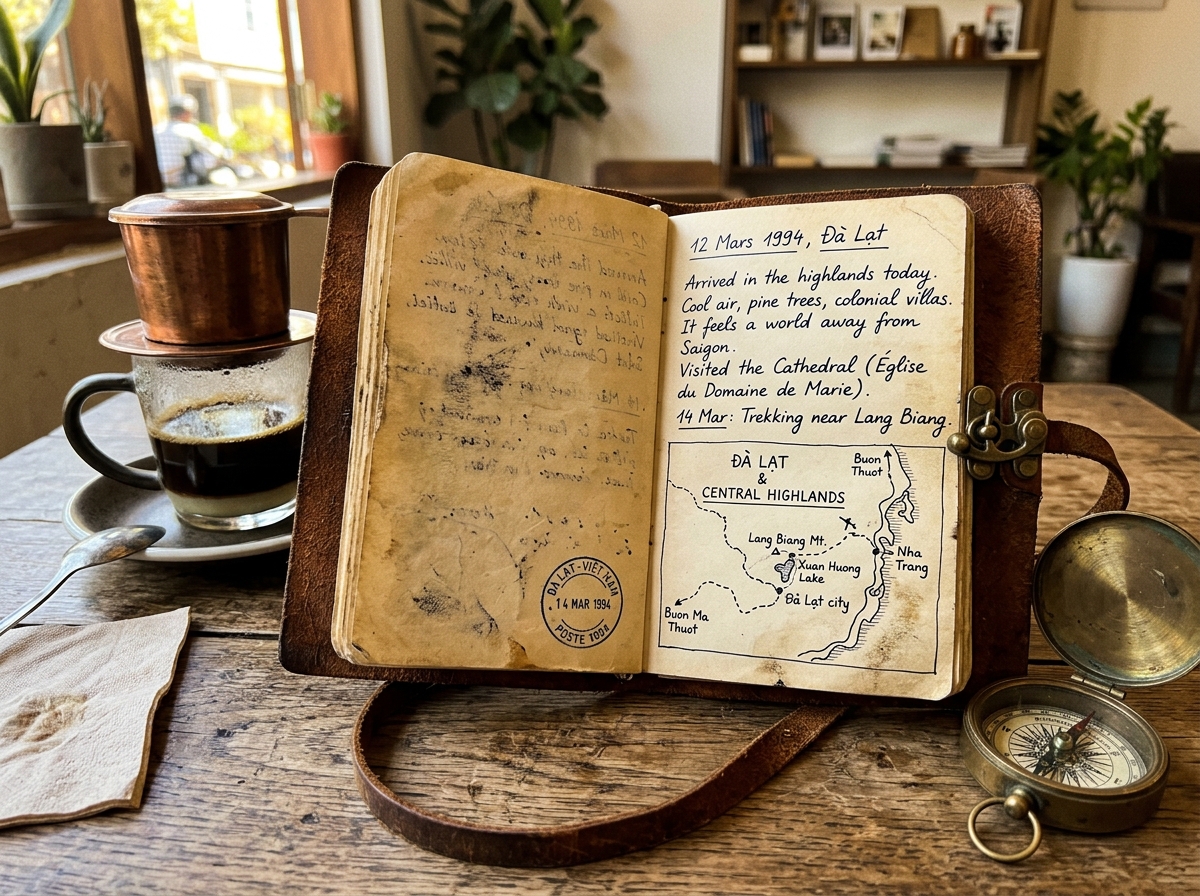
In the early 1990s, Đà Lạt was a quiet, mist-shrouded mountain town recovering from decades of isolation. The colonial French villas were weathered, the asphalt roads turned into red basalt dirt tracks just a few kilometers outside city limits, and there was not a single internet cafe or international bank in the entire province.
When the first curious European backpackers arrived carrying worn paper phrasebooks, a small group of educated local men in Đà Lạt — fluent in French and English from earlier schooling — welcomed them. They didn't hand out printed brochures or commercial contracts. Instead, they pointed to the rugged mountains of Lang Biang and said: 'Jump on the back. We'll show you the real Vietnam.'
Travelers in the mid-1990s began affectionately nicknaming their guides 'Easy Riders' after the famous adventure spirit. Over the following three decades, the name spread nationwide, but the authentic heart of the movement will always remain with the veteran guides of Đà Lạt.
Navigation by River, Sun, and Memory
Crossing the Central Highlands in 1994 was a genuine expedition. Bridges were frequently washed out by monsoon floods, requiring motorcycles to be ferried across swollen rivers on bamboo rafts or wooden canoes. If a tire blew out in the middle of the jungle between Đà Lạt and Lak Lake, there were no roadside repair shops — the guide would strip the tire with a tire iron, patch the inner tube using a scrap of rubber and vulcanizing glue, and pump it by hand.
At night, riders and travelers slept on the woven bamboo floors of M'Nong and K'Ho ethnic longhouses, sharing warm home-cooked meals by kerosene lamps and drinking fermented rice wine (Rượu Cần) through long bamboo reeds with village patriarchs.
Preserving the Soul in the Modern Era
Today, while the main highways have been paved and modern communications exist, our philosophy has not changed by a single degree. We deliberately avoid crowded tour bus highways in favor of secluded country backroads, single-track farm trails, and authentic ethnic minority hamlets.
We ride with Japanese motorbikes meticulously maintained, equipped with heavy-duty luggage racks and international safety gear, but the human warmth, spontaneous roadside coffee stops, and deep cultural reverence remain identical to that very first journey in 1991.
“Anyone with a GPS can follow a highway. But to understand the soul of the people, the smell of drying coffee, and the silence of the high mountain pass — you have to ride with someone who was born here.”